Frank Talk About Splicing

In general, I am quite a fan of archaic sailing arts. Some of them I can even justify under the heading of safety, like knowing how to use a sextant. But for practical reasons, I hesitate to recommend splicing braided line. I realize that synthetic braided lines are not really ancient; but splicing is.
The argument for an eye splice versus a bowline often revolves around breaking strength. The bowline may reduce the line’s strength by 50%, the splice, say 25%. But let’s get real. We never choose running rigging based on breaking strength. What we want is low stretch. A polyester halyard that we might finish with an eye splice will have a tensile strength of around 10,000 pounds on a 40-foot boat. A splice will reduce this to somewhere around 7,500 pounds, and a bowline to 5,000 pounds. A common safety factor is 5/1 although let’s go to 10/1 to be conservative. My wife will surely be telling me to cut back on the beer well before I reach 500 pounds, so a trip up the mast in the bosun’s chair causes little fear, even hanging by a bowline. If you’re paranoid about that knot holding your life in the balance, then put a couple of hitches in the tail or seize it to the standing part. But if you’re really that worried about whether a bowline will hold, perhaps it’s time you learn how to tie one.
There is another issue with putting an eye splice at the working end of your halyards. It’s a good idea to switch your halyards end for end once in awhile to avoid all the strain at masthead sheave being in one place forever, which shortens their useful life. Great, so now with the eye splice you have a knobby bit at the hauling end. And of course you have to spend a half hour finding a fid and remembering how to do a splice for the headboard shackle. I have always used a bowline here. You untie the bowline and switch ends, no problema.
Maybe a braided line has parted and you want to splice it back together. This can happen for three reasons I can think of: 1) The line is too small. This is very unlikely. All but extreme sailboats carry running rigging that is quite a bit over-sized. Regular old utilitarian 1/4-inch Sta-Set has a tensile strength of 2350 pounds, which is enough to lift an entire Catalina 22 right out of the water. That is one-quarter-inch line. We use larger lines for sheets and halyards so they’ll be low-stretch and nice on the hands. 2) Chafe. Forget fixing the line; deal with the chafe, or it will break again. 3) It is old. Use it for art projects, like macramé flower pot hangers. It needs to be taken out of service, not repaired.
3-strand laid nylon is used for docklines and anchor rodes for the opposite reason that braided polyester is used for running rigging—because it does stretch, which lessens the shock when wind or waves cause strain. A better case can be made for splicing laid line. Its only a matter of taste, but to me it’s more traditional looking and prettier. There are some places you’ll almost certainly want to use an eye splice on laid line. One is on the thimble for the ground tackle shackle, which rhymes. Another is on the rope-to-chain splice that permits nylon rope to smoothly transition to chain when running through the type of windlass gypsy that accommodates both. Good idea to inspect and refresh these occasionally. Eye splices are also useful on dedicated docklines, as we do on our Tradewinds boats. But I can do anything with a knot that you can with a splice, and then untie it to use for something else. The splice, on the other hand, lives at the end of the rope, making it unsuitable for reeving through a block or padeye, or tying knots.
Now consider the practicalities of repairing laid line with a splice. Say you want to put a splice in an anchor rode after it has chafed through at the bow. Don’t you have bigger problems here? The rest of the line is on the bottom with your anchor where you can’t retrieve it. And your boat is on the rocks. If you think this could happen but because you’re an optimist, you’re confident that you’ll be alert enough to notice the wear before the line parts, then by all means learn the long and short splice to repair the damaged line. But tend to your chafing gear, refresh your rode every, say, fifteen years, and you’ll never need this skill.
On our circumnavigation, we sailed 30,000 miles. I have done the math, and it turns out that it would take 125 years for the typical recreational sailor to do that distance on San Francisco Bay. Since all rope eventually deteriorates in sunlight, you’ll no doubt need to replace your running rigging before then, along with your hips, knees, teeth, and friends. But we left home with Sta-Set sheets and guys and pole topping lifts, and Sta-Set-X halyards, none of which were even new. We came back 27 months later with the same running rigging. I was a bit miffed that I never got to use those brand new spares I carried all the way around the world.
All it takes is a little attention to chafe, and you’ll never have to rummage around in your bosun’s bag for a fid.

Posted in General | 4 Comments

Sailing ABC – A is for Anchor – Anchoring, I

Sailing ABC  by Marianne Wheeler

A is for Anchor – Anchoring, I

We all like to sail fast and be blown away by the wind, but it serves a sailor well to know how to anchor and make a boat stay put on the water.

Ground tackle, the anchor and its rode (rope and chain), and the knowledge of how to use it are the key to avoid dragging at anchor and getting into trouble when the wind kicks up or the current runs strong.

It seems the anchor always holds until you leave the boat to dinghy ashore, or until 2:30 am, whichever comes first.

Tradewinds ASA courses Basic Coastal Cruising 103, Bare Boat Cruising 104, and Advanced Anchoring classes fortunately provide the knowledge for successful anchoring.

Even before you learn how to anchor, when you are just beginning to sail on Tradewinds’ 25 foot Catalina Capris practicing your ASA Basic Keel Boat 101 skills, you should consider the anchor.

My friend Salty Clay says it’s a good idea to be familiar with the anchor and its rode in a mesh bag mounted at the bow. Know how to lower it, cleat it off, and retrieve it, should you have to anchor involuntarily.

If you need to stop the boat before drifting into danger, maybe because the wind died and you lost steerage, or you got into irons and can’t get out, or you hove-to watching the sunset without checking the lee shore – anytime you need to avoid hitting anything and in the excitement to get underway pulled one too many times on the engine starter so the outboard flooded and won’t start – remember the anchor and use it promptly.

Posted in General | Tagged | 1 Comment

Sandbaggers

The term “sandbag” is used in several seemingly unrelated senses. As a verb it can mean to emplace bags to prevent flooding; to pretend to be a duffer at golf or poker or auto racing, only to reveal your mastery when the wager becomes substantial; or to overwhelm a person or group, as in a public meeting. As a noun, a “sandbagger” is a person engaged in the activities just mentioned. If you trace the term’s origins on Google, you get references to its use in 1860, when criminals were known to use sandbags that didn’t appear to be dangerous as weapons to violently attack someone by surprise.
But this term was also used even earlier, in the 1850s, to describe a kind of racing sailboat. The “sandbagger,” was so named because of the practice of using movable bags of sand as ballast, which the racing rules of the day permitted. Without shifting the ballast, these boats could capsize. Moving ballast to improve upwind speed, like modern dinghy sailors hiking out or racing crews sitting on the rail, was not new. It had been done by pirates, privateers, and slavers for decades to improve performance when on the wind, running from the law. But as ballast of the day on big boats was pig iron or rocks, it took a large crew to achieve the desired result. It couldn’t be done very quickly, so was reserved for those times when you would be on one tack for quite awhile.
The racing “sandbaggers” were flat-bottomed sloops in the 18-28 foot range, small enough so that one or two men could have a large effect on the upwind performance of a boat by moving bags of sand. They first became popular in New York, later spreading to Boston and the Great Lakes. Sandbaggers were based on working oyster boats, but quickly became one of the earliest classes of boats commonly raced in the United States. Replicas have been recently built and can be seen in action here: http://www.nshof.org/index.php?option=com_content&view=article&id=443%3Abull-a-bear-music-video&Itemid=271. Oddly, this video and the longer one that follows make no mention of the use of sandbags.
Today, high-end race boats use exactly the same concept, moving water instead of sand and pumps instead of manpower. But the relationship is between the derogatory term “sandbagger” and the clever and perfectly ethical sailing practices of yesteryear, if indeed there is any such relationship, remains obscure.

Posted in General, Nautical Terminator | Tagged , | Leave a comment

Know Your Depths

We had an opportunity recently to check depths in the mooring field at Ayala Cove and the docks at Sam’s Anchor Cafe. The results were surprising! At a zero tide:

  • Depths on the west and southwest sides of the mooring field (the side closest to the land) are 5 feet.
  • The middle of the mooring field is a pretty consistent 4 feet
  • The moorings located on the northeast side (the inside of the cove) have only 3.5 feet

Santorini and Orion draw nearly 6 feet, which means if you approach the mooring field from the normal direction in less than a 2.5 foot tide, you are going to get stuck! Here is a practical example. Tides for Saturday September 21 and Sunday September 22, 2013 indicate:

  • High at 1323 6.1; Low at 1935 0.3; High at 0218 5.2; Low at 0737 1.7

When you arrive at your northeast mooring ball at 1400, you will have over 9 feet of water … no problem. By about 1930, your keel will settle over 2 feet deep in mud which probably won’t be a problem because you plan on spending the night there (hopefully that motor boat beside you tied up to 2 balls, because if he only grabbed 1 he is going to swing all night and you aren’t). Unfortunately, at 0730, when you plan to leave to sail over to San Francisco for breakfast, you are at another low, and back to a foot deep in mud … in other words … stuck fast. Using the rule of twelfths (see below) to figure tidal changes, it will be about 0930 or 1000 before you have enough water to leave the mooring!

Sam’s Anchor Café is another location to be careful.  At a zero tide, there is 4 feet at the end of the left dock, and 3.5 feet at the end of the right dock.  Half way up the docks, there is 3 feet on the left dock and 2.5 feet on the right dock.

Now for the tip …

First, know your draft, and how your depth sounder reads compared to actual water depths. The only way to be sure of that is with a lead line. A simple one can be made by tying a 10 or 12 oz. round lead fishing weight to a 25 or 30 foot light weight line. Mark the measurements on the line (mine has a mark every 6 feet, with the last 6 feet marked in 1 foot intervals). Lower it into the water beside the boat to get an actual measurement of depth. Compare that to the depth sounder on the boat. If the line indicates 16 feet of water, the depth sounder shows 10 feet, and you know you have a 6 foot draft, then the sounder is reading from the bottom of the keel, and you have 10 feet of water under it.

Second, know what the tides are doing! Not just the highs and lows, but what is happening in the middle. After all, rarely will you arrive or depart right on the extreme. A good general rule to follow is called the Rule of Twelfths, which basically says 1 twelfth of the tide change will take place in the first hour after the high or low. 2 twelfths of the change will happen during the second hour, 3 twelfths during the 3rd and 4th hours, 2 twelfths during the 5th hour, and the final 1 twelfth during the sixth hour. Sounds challenging, but is actually pretty simple. For example … using round figures, lets say the tidal change (low to high) is expected to be 4’. 4’ divided by 12 equals 4”. At the 0800 low tide, you have 2’. One hour later (0900) you should have about 2’ 4”. One hour after that (1000) you will have about 3’. At 1100 about 4’, at noon 5’, at 1300 5’8″, and at 1400 6′. It’s not exact, but it will get you pretty close.

When you tie up, check your depth (use the lead line if you don’t have a working depth sounder you trust). Compare the depths with what will happen to the tide during your stay. Get out before the water goes away! If I have a 5’ draft with 5.5’ of water and a falling tide, I’m going to find somewhere else to go.

Posted in General, Skipper's Tip | Tagged | 7 Comments

C’mon, It’s Not All Bad!

C’mon, it’s not all bad!
Here’s another chapter from Captain Craig’s offshore journal. Okay, okay, a few folks might have been a little spooked by my article on scariest moments outside the gate. Remember, these are only ten stories from over a hundred trips outside the gate. All those trips that went exceeding well are perhaps a lot less exciting but, as I said in my last article, wonderful times can be had if you are well prepared, watch the weather forecast, can handle the idea of solving problems if and when they arise and don’t get complacent. Really these are good rules to follow inside or outside the gate.
So, what about the good stories? As I said, these are usually less exciting. I do know that it was the good memories from my first trip to Hawaii that made me want to do it again. I call this selective amnesia. I remembered the beautiful sunsets, the moon lit nights with fabulous stars, cruising at 8 to 10 knots with a spinnaker and perfecting my downwind driving during the day so that it was a no brainer at night. The celebration at the half way point and the exhilaration of sighting land were really fun too. So, those fond memories outweighed the “challenges” that we also faced racing to Kaneohe Bay.
Selective amnesia seems to work well regarding my trips out the gate too.
When doing the Half Moon Bay to Drakes Bay loop, I have to admit that going south has been more fun and relaxing. A nice broad reach on the ocean makes for some fun steering and the legs are long enough for everyone to have a “trick at the wheel”. If you haven’t heard that phrase before, look it up. That’s a good ‘ole nautical phrase. I’ve learned that when making the “loop” you’re usually better off going to Half Moon Bay, then Drakes Bay and then home. If you haven’t taken Tradewinds Advanced Coastal Cruising Class (ACC) yet, your instructor will discuss why this is the case.
Visiting the rough and tumble fishing boat port at Pillar Point Harbor in Half Moon Bay is always fun. We usually have a great meal at the Ketch Joanne, Barbara’s Fish Trap or Half Moon Bay Brewing Company. Have you tried a Big Break Ale, Matt? (edit: Of course I have! I LOVE HMB Brewing…) A short walk into the quaint little town of Princeton By The Sea, is fun also.
Going north has its moments also. There are several options for going north on the California coast. Keep in mind that the prevailing winds are from, guess what?, right where you want to go. Your options are motoring, motor sailing or a lot of tacking. For me, it has been a fun challenge to maximize tacking efficiency. But this requires a fair amount of planning, patience and perseverance. Did I mention motor sailing? Hopefully, you all caught that. Once again, in ACC class you’re going to learn that motor sailing, when done properly, can be a very important component when going north on our coast. And, please be mindful that Tradewinds policy is no motor sailing inside the Bay.
If you motor out to the Farallones from Half Moon Bay early in the morning when the winds are light, you’ve set yourself up for a beautiful reach into Drakes Bay in the afternoon with plenty of light left over anchoring and firing up the BBQ. Drakes Bay can be quite idyllic. It is well protected from NW swells even though it can be quite windy. The landscape is spectacular with its white cliffs and colorful rock formations and sparse enough to imagine what it must have been like when Sir Francis Drake careened his “Golden Hinde” there in 1579.
Rounding the Farallones gives one a great sense of accomplishment but, if you’re expecting a beautiful island with palm trees, you may be a little disappointed. After all, they are just big treeless rocks on the edge of the continental shelf. Still, it’s fun sighting the islands, rounding them with a wide margin and saying you’ve done it.
Remember those sunsets and starry nights I mentioned earlier? I’ve had my share of those, right here on our little coast. Sea life is abundant also: whales, dolphins, porpoises, sea lions, harbor seals, flying fish, pelicans, frigatebirds, shearwaters, scoters, gulls, huge jelly fish, etc., etc. I always bring my field guides!
I’m not a fisherman. Sailboats and fishing lines don’t seem to pair together very well unless you’re going to sail in a straight line for a good while. We caught a lot of fish going to Hawaii and I know there is good fishing on our coast too. Just ask Elvis. Elvis runs a fishing charter boat and hangs out at Tradewinds from time to time.
Surf’s up! Coming back into the gate on a run with a following sea and flood tide can be a real kick. I can remember surfing a Catalina 38 with speeds up to 18 knots. Of course this was with a Spinnaker and a Blooper and the timing was well planned. Do they still make Bloopers Angie? (edit: Kinda…. but they are horribly out of style…)
This was tricky work but great fun. You can do the same with just the main and jib, wing and wing. You’ll have the skills at the ACC level to control the boat in following seas, being mindful to avoid the jibe. Enjoy the ride!
Hopefully, these comments will inspire some interest in sailing the Gulf of the Farallones!
Fair winds.
Captain Craig

Posted in Adventure Updates, Destinations, General | Tagged , , | Leave a comment

What’s in a Gust

A few days ago I was checking the weather forecast for that day on San Francisco Bay.  It was a pretty mild wind forecast for late August, winds from the SW at 15 with gusts to 25, however it got me thinking about what that really meant.

Winds from the SW at 15 … wow … the perfect wind for sailing under an un-reefed main and full jib.  But, what about those gust to 25?  Here are a couple of things to keep in mind about wind in general and gusts in particular.

First, the difference in the power of the wind is not just 10 knots (a 66% increase).  The power of wind doesn’t increase in a straight line, it increases exponentially.  25 knots of wind contains nearly 300% of the force of a 15 knot wind.  That well balanced 15 knot sail plan is way over powered in 25 knots.

The second thing to keep in mind is wind direction.  Although this can be altered by the geography of the bay, in most cases, gusts come from the right of the wind’s true direction.  In other words, that SW 15 wind may be gusting at 25 from the W.  If you are on a port tack in the gusts your sails are probably “under trimmed” based on the wind direction, which may be a good thing while you ride out the gust.  On the other hand, if you are on a starboard tack, when the gust hits, you are over trimmed in 3 times more wind!  No wonder things get a little hairy out there during gusts.  One last thought regarding the starboard tack idea … what is going to happen if you are on a run before the gust overtakes you?  At best, you will be sailing by the lee … at worst; the gust gets on the wrong side of the main sail, and WHAM!  An accidental jibe in 25 knots can ruin an otherwise perfect day of sailing!

So, here is the question.  In those conditions, do you reef, or not?  Unfortunately, the answer is not a simple yes or no.  How many gusts are there?  How long are they lasting?  What is my tack and point of sail?  I do know that I am more likely to reef if I’m on a starboard tack with the wind forward of the beam and less likely on a port tack or with the wind abaft the beam.  I probably won’t worry too much about being on a run on a port tack, but will rarely go on a run on a starboard tack during gusty conditions.

It basically boils down to this … if I find myself (or someone else on the boat) asking “should I reef?”  The answer is YES!!  It’s very easy to shake it out later if I didn’t really need it.

Posted in General, Skipper's Tip | Tagged | 1 Comment

Capt. Craig’s Top Ten Scariest Advanced Coastal Cruising Stories

September 2013

Introduction:
So… why I am sharing these stories?
As we turn more instructors and members loose to sail “outside the gate”, I think it is important to share some important hard-earned lessons about sailing in the Gulf of Farallones. You’ve read the stories in Latitude 38 about recent tragedy. Most, if not all major mishaps could have been avoided. We all learn from experience. I’ve been teaching Advanced Coastal Cruising since 1992 and sailing those waters on my own since ’76. I probably have at least a hundred trips under my keel and I’ve learned important lessons on almost every voyage.
What are the key take-aways? They are: Be very, very well prepared, you must learn how to be a problem solver and don’t ever, ever get complacent. If you can do these things, you’ll wind up safely enjoying the challenge and beauty outside the gate.

Top Ten Scariest Advanced Coastal Cruising Stories
1. Boat: Hylas 44, Location: 4 miles southeast of Chimney Rock, Time: 2230, Winds: NW 35 to 40 knots, Seas: 12 to 14 ft – Steering Failure! The boat rounds up into irons and starts to broach. Everybody has PFDs, harnesses, tethers and attached to jack lines. We work on getting both sails down and lying-ahull. Upon inspection we determine that two steering cable pulleys have pulled out of rotted plywood mounts. We locate the emergency tiller and find we have to cut a hole in the headliner for the tiller to connect to the rudder post. I should have made sure I understood that before we left! The guys get a good lesson in steering a boat with an emergency tiller as we motor through rough seas and into Drakes Bay for anchoring and rest before our trip home.
2. Boat: C&C 40, Location: Chimney Rock at the entrance to Drakes Bay, Time 1830 (Summer), Winds: Light Westerly, Seas: less than 5 ft. – Navigating by Braille! -We’d plotted a nice course into the Bay from the Green No. One marker buoy. Unfortunately, the ebb tide was very strong and kept pushing us to the west. Going about 6 knots under power, we had a close encounter with Chimney rock, bouncing very hard on a submerged rock. After getting into the Bay and getting a hook on the bottom, we started a rigorous inspection looking for signs of hull damage. We found a slow leak next to cracks around the keel bolts and cracked fiberglass where the backstay tensioner was located. We determined we could motor safely back to SF if the seas were calm. We developed some contingency plans about calling for assistance and maintained a constant watch on the leak as we motored home at first light the next morning. Attention Coastal Navigators – this would have been a great opportunity to use the Danger Bearing.
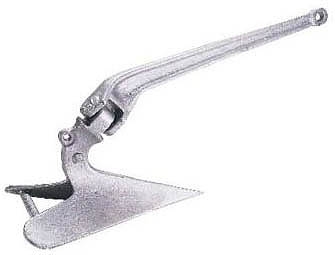
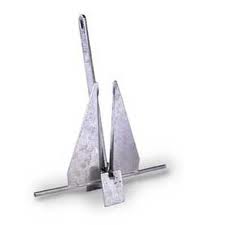
3. Boat: Jeanneau 43, Location: At anchor in Drakes Bay, Time: 2300, Winds: W 25 knots, 35 knots and then 40 knots – A very long night! After a rough trip into Drakes Bay, predicted winds keep building. Winds were forecast to drop off after midnight but just kept building until 5 AM. Drakes Bay has grassy spots and “Whale Song” has a Bruce anchor as primary. These anchors don’t hold well in grass. If you’re going to Drake’s, you better have a plow anchor. This is the same day that one of my crew became hypothermic and we still had four hours of tacking to get into our anchorage. (Instructor tip: use your students to keep the anchor watch, you probably still won’t sleep, but students need to understand the importance.)
4. Boat: C&C 40, Location: 5 miles south of Drakes Bay in about 200’ depth, Time: 2100, Winds: West 20 knots, Seas: 6 ft. – Crab Pot! Crab pots are plentiful around the 200 ft. depth contour in season and, unfortunately, abandoned pots stay out there all year. It is hard enough to see them during the day and impossible at night. On one of our trips during night time man overboard drills we snagged a pot on the rudder and came to a soft stop. We immediately got our sails down. At least conditions were not miserable. We were snagged for several hours trying to free the line with a boat hook and anything else we could think of. Later we tried various sail combinations to try and sail off. Since we didn’t know if the line also snagged the prop, we stayed completely away from the idea of using the engine. We were able to turn the prop by hand in neutral, though. With enough wave action we finally were able to grab enough line to cut through. On another trip, we snagged a pot and just floated free in about twenty minutes.
5. Boat: Jeanneau 43, Location: half mile east of Southeast Farallon Island, Time: 1300, Winds: W 25 knots on nice beam reach, Seas: 6 ft. – “There be whales here!” I used to ask the universe to see whales up close. I also used to promise my students that we would see whales on every trip offshore if we looked hard enough. On one trip north we encountered a pod of at least fifty Gray whales, coming every which way including straight at us. We had several surface right next to the boat and one surface right in front of us. I am sure that that particular whale looked at me eyeball to eyeball! This was exhilarating but at the same time very precarious. These whales generally follow the 100 fathom line and can be seen all year long in the Gulf of the Farallones. I no longer go out of my way to go near whales. In fact there are official advisories about not doing this. I also turn on the engine so that the boat makes a little more noise but I’ve never seen any evidence that this makes a difference. I think a sailboat is fairly insignificant to these great creatures. I haven’t heard of an actual collision with a whale in our waters recently but I recommend giving them wide berth.
6. Boat: Hunter 36, Location: Smack-Dab in the middle of the Potato Patch, Time: 1400, Winds: W 30 knots, Seas: 20 ft – Roller Coaster! Before I knew better, I occasionally found myself in the Potato Patch, a.k.a. Four Fathom Bank, a.k.a. the North Bar at the entrance to San Francisco Bay. So… what happens when you have 15 to 20 ft. seas piling up against 4 fathoms (24 ft of water)? The answer is a wild and very dangerous ride. With only a jib, our little 36 ft. boat was making about 14 knots and barely controllable with a steep quartering sea. Never-never do this! In fact, please, just stay out of the Potato Patch as a matter of habit.
7. Boat: Ericson 39, Location: Somewhere between the Farallones and Drakes Bay, Winds: NW 25 to 30 knots, Seas: 6 to 8 ft. – Man the bilge pumps! It’s always a little disconcerting to go below when offshore and find a foot or two of water sloshing around your feet! On top of the water we also found a visible sheen of diesel fuel. The water got pumped out and we made it safely into Drakes Bay. With flat seas the next morning we had a safe return to San Francisco Bay. Tony Johnson can tell us where that water came from! This boat was his “Maverick” and went on to circumnavigate the globe!
8. Boat: Jeanneau 43, Location: north of the Main Ship Channel in between Pt. Bonita and the Golden Gate Bridge, Winds: W 10 knots, Seas: < 2 ft. – Fog! Unfortunately, I have too many fog stories. The scariest was coming back into the Bay one morning. We had purposely stayed way North of the Main Ship Channel to avoid commercial traffic. We were getting intermittent contacts on our RADAR which wasn’t working properly on this trip. We hadn’t been monitoring Channel 12 or 14 because we came home via the Bonita Channel. From the pea soup fog, two large tug boats emerged on either side of us within 100 yards each. That’ll make your hair stand on end. RADAR… don’t leave home (the Bay) without it. Even better, take Bill Yawn’s ASA RADAR class.
9. Boat: Jeanneau 43, Location: Way too close to Colorado Reef, Time: 1530, Winds: S 15 knots, Seas: 2 to 4 ft. – Mavericks Anyone! It’s usually a reach down to Half Moon Bay from San Francisco with prevailing Northwesterlies. On this day we had winds from the south and had the pleasure of tacking. One particular tack took us way too close to shore, about half way between Pt. Montara and Red Buoy “26”. Check the chart. This is just north of Colorado Reef and famous breakers of the “Mavericks” surf competition. This is no place for a sailboat. This was a good lesson for the instructor who was dazed by a good dose of the sea sickness medicine called Stugeron and relied too heavily on his student navigators to keep the boat safe.
10. Boat: Jeanneau 43, Location: 2 miles west of San Pedro Rock, Time: 1730, Winds: NW 25 knots, Seas: 5 to 7 ft. – Anyone wearing a belt? We were enjoying a nice reach on moderate seas and running the engine to keep the RADAR juiced up when the engine alarm went off. Oil pressure dropped to zero. Opening the engine compartment, we got a nice surprise. Oil everywhere! After a frantic search we found the source of the problem. The oil filter had worked itself loose. How can this happen? The engine had just been serviced and when the filter was replaced, the gasket wasn’t seated properly. You could see how it was deformed. Next question… do we have oil? How about a filter wrench? Fortunately, there was oil but no wrench. One of my students volunteered his leather belt and we replaced the filter well enough to power into Pillar Point Harbor. Then… the massive clean-up effort!
Posted in Classes, Skipper's Tip | Tagged , | 5 Comments

Plimsoll Line

Remember when you were just learning to sail and the boat heeled over for the first time? My instructor was calm, but I’m told I was yelling “Help! Yikes! Eeek!”…although I’m pretty sure it was quite a bit more dignified than that. From ancient times to the present, this feeling that the boat might capsize or sink has been, well, a concern, for good reason. It’s the space age, and boats are still going to the bottom.
The Cretans established guidelines for loading boats as early as 2500 BC, but it wasn’t until 1930 that there was an international agreement on the standards developed by an Englishman named Plimsoll in the 19th century. That circle with a line through it next to a sort of ladder graphic that you see on the hull of the Red Oak Victory is the result. This represents the waterline maximum that the ship can safely be immersed to, depending on season and salinity represented by the various horizontal lines.
So what’s safe for our sailboats?
The Net Register Tonnage of Tradewinds’ Lionheart is 5.49, which means the volume that can be used for cargo or passengers is 549 cubic feet. The weight of this volume of water is 549 x 7.5 [gallons per cubic foot] x 8.333 [weight of a gallon of water] = 34299 pounds. So if the boat itself weighed nothing and it was filled with water, the volume of the boat would displace 34299 pounds of water. But the empty boat already weighs 9170 pounds, so if we subtract that from 34299 we get 25129. This is equal to about 405 cubic feet or a little over 3000 gallons or roughly ¾ of Lionheart’s interior volume. So if we fill Lionheart with 3000 gallons of water, she will weigh the same as the surrounding water and sink. But this assumes a perfectly stable, flat sea. Boating enthusiasts have adopted a much more conservative rule of thumb for capacity of passengers which you will recognize: length times beam divided by 15. On Lionheart this gives a capacity of 20, which is quite a bit more than you’re likely to have aboard. If we assume 184 lbs per person, we get a total of 3680 pounds, about 1/7th of what it would take to sink the boat. The other 6/7ths represents her reserve buoyancy, allowing that heeling, and downsizing my “Eeek!” to “Yow!”

Posted in General | Leave a comment

Beware the Lee Shore!!!

We have all heard it and all believe it, but really, what is a Lee Shore. Its not just the “land” to leeward … it’s also the row of boats behind you as you back out of an upwind slip. Its the row of boats next to you as you back out of a down wind slip. It’s “big boat row” as you exit D Dock. It’s the Red Oak Victory Ship as you round the corner into the reach.

Regardless of what it is, stay as far away from it as you can!!!

Posted in Skipper's Tip | Tagged | 1 Comment

Crew Overboard Practice

You can never practice crew overboard recoveries too much! If a real crew overboard happens you want instinct and “muscle memory” to take over. Only practice will get you to that point. For a bit of extra practice try cleaning the bay. Next time you sail past a piece of trash floating in the bay, check for safety and conduct a crew overboard drill. Carrying a small net may help with some of the trash you find. Chances are you will never be at a loss for opportunities, and you will hone your and your crew’s skills, cleaning up the bay at the same time.

Posted in Skipper's Tip | Tagged | Leave a comment