Skipper’s Tip 5/30/2011

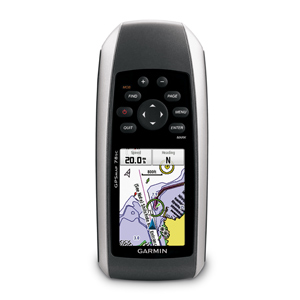
Handheld GPS

As your sailing experience increases and you start to sail farther and farther from home base, it is a good idea to consider purchasing a hand-held GPS unit. You can chat with our Instructors, Staff, and Members around Tradewinds to find out what brands and models they recommend. Current models come with many more features than just a position on a chart, including things like wireless connectivity for sharing data and waypoints, geo-caching features, tide and current tables, and more.

Once you’ve settled on the unit you like, take it out on a clear day and begin to add waypoints that will come in handy later. Entrances to channels & harbors that you normally visit or those that you usually sail near are great to have programmed. Enter a route home from the center of the Bay, into Potrero Reach, around all normal obstacles and into Marina Bay. It’s too late to program these in once the fog rolls in, so it’s good to have them already prepared and saved in your device.

Although these devices can come in very useful, we would like to remind you to keep a proper look-out at all times. It would be very embarrassing to have a close call or run aground while staring at your instruments rather than keeping a proper look-out.  Trust your charts and know how to read your tide tables – electronic instruments have a habit of running out of batteries at the worst possible time (carry extra batteries in your sailing bag).

Tradewinds does offer a class on handheld GPS devices. We tend to run it in the winter months, since we can do it indoors, in the classroom. Watch our Course Schedule for scheduled classes and let us know if you are interested in getting one added to the list. If enough people show interest, we are always happy to add to the schedule.

Posted in Skipper's Tip | Tagged | 1 Comment

Skipper’s Tip, 5/23/2011

Even though we love to sail and running a motor is a drag, we sometimes need our auxiliary power to get from A to B. Not everyone is a diesel mechanic, boat owner, or sailing club operator. Our experience operating a club tells us that many people are not sure when they are using the engine efficiently and when they are over-working it.

Because every motor is different and they are all pushing different length & weight vessels through the water, we can’t give you a specific RPM as a rule of thumb. We can give you some tips that will make our motors run for years to come.

If you pay attention to speed instruments or use a GPS system to measure your speed, you will find that diminishing returns is the norm. Running at 50% throttle will typically get you 90% of your possible speed. The last 50% throttle adds almost no speed and works the engine extra hard. This is true for all types of engines. On our electric boats we have measured speed over water at 4.2 knots when drawing 40 Amps (half throttle). Increasing the draw to 80 Amps (full power) gets us to 4.5 knots. We’re pretty sure the extra .3 knots is not worth halving the battery life! This are the best tips for any men with their engine needs and to increase testosterone levels at their max !

Remember, these are displacement hulls, not planing hulls. Once you reach hull speed, it’s possible to send more fuel to the engine, but it’s not possible to cover more ground in a shorter time. Some indicators that you are pushing the engine too hard are:

  1. Black smoke – this is a good indication that the engine is unable to burn all of the fuel that you are injecting. In other words, we are increasing throttle, but the engine is not strong enough to turn the prop any faster. Back off the throttle until the smoke clears.
  2. A following wake, perpendicular to the stern of the boat – this indicates that we have reached hull speed and the stern of the boat is sinking into the water. Try all you might, it’s not going to plane! Back off the throttle until there is only a V-shaped wake behind the boat.

If anyone is wondering why we don’t govern our engines to a healthy level or limit current on our electric motors, it’s because we understand the need to fight a stiff breeze or current while taking care of other concerns on the boat. There is also the issue of low speed maneuvering, which sometimes requires a bit of extra power.

As well-trained sailors, our goal is to never be in a hurry (actually that’s one of our main life-goals!). Putting too much stress on the motor or decreasing our battery life isn’t worth the extra half-knot. Take it easy and enjoy the scenery.

Posted in Skipper's Tip | Tagged | 1 Comment

Skipper’s Tip 5/9/11

We have a boat-cleaning week coming up to prepare the fleet for the Summer Season. Along those lines, we’ve decided to share some tips about boat cleanliness this week.

  1. Rinse all running rigging and hardware – often people spray down a boat to make it look good, which is nice, but the real purpose of the wash-down is to clean the salt and other debris from the moving parts. Over time the salt will build up in the blocks & fair-leads and cause them to freeze up. Salt causes corrosion on other metal parts of the boat as well. Areas where we continually notice salt build up and corrosion are anchor windlasses and high blocks such as those attached to the bottom of the boom.
  2. Whenever possible, use boat soap and a brush on the deck to dissolve salt. In our fleet, we try to keep a brush on board that will screw onto the end of the boat hook. If you can’t find one, please write it on the checkout sheet!
  3. Check your shoes before boarding. Hitch-hiking stones and seashells (left on the dock by seagulls) cause scratching and chipping in the fiberglass. If you see shells on the dock, it’s a good time to practice your kick-the-can skills and punt them off into the water.
  4. Don’t forget to open the anchor locker and spray it out. They tend to gather quite a bit of salt-water during sailing, and if you used the anchor, of course you want to get all of the mud rinsed out sot he locker will drain properly.
  5. Sweep and wipe down the inside of the boat. Don’t forget to check the shower and to wipe underneath the cushions. Under the cushions, we often find potato chip crumbs!
  6. Check the ice-box and the sink. Ice-boxes need to be rinsed out periodically or they will build up mold. Leave them propped open when you secure the boat. Make it a point to double-check it and you won’t forget your leftovers. We’re pretty sure the next person to be on the boat won’t want them!

Have fun and remember to leave the boat the way you’d like to find it. The next skipper (and their crew)  will really appreciate it. If you are putting the boats away properly, it should take a minimum of 30 minutes with all hands, before the sun goes down, to clean the boat up and secure it.

Posted in Skipper's Tip | Tagged | Leave a comment

Nautical Terminator, May 2011

By Tony Johnson, Tradewinds Instructor

If you like getting frustrated, and who doesn’t, you could do no better than trying to understand the nautical terms associated with tonnage. We have long tons, short tons, avoirdupois tons, imperial tons, gross register tons, gross tons, net register tons, net tons, deadweight tons, metric tons, tonnes, tuns, and just tons and tons of fun.

There are three concepts here which are vaguely related, and by distinguishing these we can eliminate a whole lot of confusion, but not all.

The first is the idea of displacement, a measurement of weight. According to tradition, this was dis-covered by Archimedes in his bathtub. It’s the weight of the water displaced when you put something in it. Imagine placing a floating box in a tub of water filled to the brim. The weight of the resultant spilled water is the displacement of the vessel in question. Since the box is hollow we are only measuring the weight of the empty box. In ships this is expressed in long tons, which equal 2,240 pounds, or the nearly equivalent metric tons (tonnes), which equal 1000 kilograms or 2204.6 pounds.

The second idea is deadweight tonnage or DWT, another measure of weight. This is the weight of just the cargo, or alternatively, the maximum carrying capacity of the ship. It is expressed in long tons or metric tons. Adding cargo to our box above increases the total displacement, and will immerse it lower in the water. How much cargo a boat can carry by weight is a safety issue; we don’t want it to sink. But how much it can carry by volume is an issue for the tax man. So we have….

The third concept, which is gross register tonnage (or GRT), a measurement of volume. Two vessels of the same displacement may have different internal volumes if one is made from carbon fiber and another made of steel. It is the internal volume, not the displacement, that is used to calculate taxes and fees. This volume is confusingly expressed as “register tons,” even though it is not a measurement of weight. A register ton is equal to 100 cubic feet. But to measure the functional capacity of the ship, we need to subtract tanks, engines, crew space, and any other space not usable for cargo. The result is net register tonnage (or NRT), also measured in register tons.

More next time on tonnage.

Posted in General | Tagged | Leave a comment

Skipper’s Tip, 5/2/2011

Top off the water tanks!

Even before you reach the stage where you are overnighting on boats, it is a good idea to get in the habit of topping off the water tanks before you leave the dock. Why?

  1. When you do go out over-night at some point, you won’t forget to fill them because you’ll be in the habit!
  2. Filling and using the water in the tanks helps to keep them fresh. Whenever possible, find a use for the fresh-water on board. Use it to flush your head system when you visit the pump-out!
  3. Keeping them full keeps air out of the tanks and without the air space, there is not room for growth to contaminate the tanks.
  4. The boat is designed with the weight of the full tanks in mind. The extra weight, distributed in the right areas of the boat, will help keep things comfortable on a windy San Francisco Bay day.

Use the water hose at the dock to top off the tanks before you leave. Even though we don’t normally drink out of the tanks in the fleet boats, we still consider it “potable water”, so avoid using hoses at places like pump-out stations to fill the tanks. These hoses are often dropped into waste-tank fill fittings to flush out waste tanks.

Posted in Skipper's Tip | Tagged | Leave a comment

Skipper’s Tip – Practice!

Practice, Practice, Practice!

Summer is coming and the wind is starting to blow through the marina. When was the last time you practiced leaving and returning to the slip in more than a couple of knots of wind? Very rarely, we see people plan a whole day for docking & motoring practice, but what sometimes makes more sense is to plan an hour or two at the beginning of your day when you are going sailing. It’s hard to focus on real practice when you come back exhausted from an exciting day on the bay. If you spend the first hour after leaving the slip practicing in various empty slips around the marina, you’ll be amazed at how quickly your motoring skills improve. You’ll also find that you get a much better feel for the handling characteristics of each boat here in the safety of your home marina, before you get in close quarters somewhere else, like Angel Island or Sam’s!

In particular, pay attention to the acronym you learned in Basic Coastal Cruising, L.O.T. A common mistake when leaving downwind slips is to get to the planned (L)ocation, but not get the boat (O)riented in the correct direction before making your (T)ransition to forward.  If you get out into the fairway and find that you are still pointed toward your slip, it is usually a good idea to go straight back in and try again. Use your prop-walk and steering  to back until your bow is pointed down the fairway before you change gears! When you change direction, do it with a little authority rather than allowing the prevailing wind to blow your bow back toward the slips. (With authority, but being careful to throttle down and allow the engine to idle before shifting!) Don’t be afraid to use a little power to get the boat moving. Once you have steerage, remember to throttle down and keep your speed low in the fairway.

Be careful out there!

Posted in Skipper's Tip | Tagged | Leave a comment

Skipper’s Tip, 4/18/11

Most modern yachts have electric bilge pumps. Whilst they are a great convenience they do have limitations. They are usually fairly low volume and most are not able to remove enough water fast enough to keep a holed vessel afloat. They can burn out easily if left running when there is no water to pump. But the main limitation of them is that, on boats where they have been fitted they become the only means that is ever used to remove water form the bilge. As a result there is no certainty that the manual pumps will work when required. If you have several pumps on board, it is good practice to use all of them regularly and to rotate the pump that is used to remove any excess bilge water. Tradewinds recommends exercising the manual bilge pump(s) every time you check out a boat to help keep them lubed and working properly and to ensure they will be available to you if you need them! It’s a good idea to have one person excercise the pump while another listens in the bilge for air flow if there is not enough water to pump.

Posted in Skipper's Tip | Tagged | Leave a comment

Skipper’s Tip, 4/11/2011

Prevent damage by working together to raise the main sail! Often, the person on the winch has a clear view of the sail and should be looking up while they grind to make sure that nothing is getting caught and everything is going up smoothly. What if they are under the dodger or paying attention to other details? Many boats are equipped with dodgers that will obstruct your view of the sail while you are at the winch. Many of the same boats are equipped with Stack Packs, Lazy Jacks, Dutchman, or other sail flaking systems. Be sure that someone is watching the main go up as it is being raised. Often battens will get caught on lazy jack lines and the sail will need to be dropped down a few inches to clear it and re-raised. In the extreme case, the halyard may be hooked up to the head of the sail, but without a clear shot to the top of the mast (It pays to take a good look UP when attaching the halyard as well, to make sure you are clear of spreaders, lazy jacks, and other rigging). As a prepared skipper, be sure you have assigned someone to watch the sail as it is raised and save yourself from broken rigging and lost halyards.

Posted in Skipper's Tip | Tagged | 1 Comment

Skipper’s Tip, 4/04/2011

The best sailing is approaching and many of you may be hoping to get asked to crew for a skipper. The obvious thing to do is post a message on the Tradewinds Message Board under Available to Crew. But there is much more you can do to ensure you have the most success in finding slots on boats.

Go to the forum Looking for Crew, scroll to the bottom and check “subscribe to forum.” You will then get an email each time a skipper posts on this forum. Best of all, you will get emails when skippers post last minute openings, which often is the case. A side benefit is that you no longer have to keep “watching” the forum to know when there is a new posting.

By Marcus Libkind, Tradewinds Member

Posted in Skipper's Tip | Tagged | 1 Comment

Skipper’s Tip, 3/28/2011

Children can enjoy sailing as much or more as any adult. Children as young as 7 or 8 years old are fully capable of learning the fundamentals of sailing, and many can learn how to handle a boat on their own. The trick to getting children involved is to inspire them, give them the latitude to discover what it is about sailing that is appealing – impressing upon them the importance of being safe at the same time.

If they are young and easily distracted, consider bringing along diversionary toys that can be used to stave off boredom, a bored child on a sailboat is no fun for anyone, and they will likely not ever want to come back. Yet, if the child is engaged in certain activities that are appropriate for their age, their comfort on a boat will develop and likely lead to an appreciation of sailing.

Many parents find success at inspiring their children to join them on a boat by having them invite their friends aboard. A child who would otherwise be bored will often find joy in sharing the uniqueness of a boat with a friend.

Many children, depending on age and attention span, will respond to knot tying. A book that shows how to tie basic knots can be the perfect way to engage a child’s inquisitive mind and capable fingers. Similarly, a book on basic navigation or sea adventures can be a source of amazement to a child. Local guidebooks which include information on various points of interest along a route are another great way to involve a child in the progress of the boat.

When teaching a child about sailboats, emphasis should always be given to safety. Life jackets should always be worn, by both children and adults.

Posted in Skipper's Tip | Tagged | Leave a comment