
Stepping onto a boat that smells like a bad gas station bathroom isn’t bad luck. It’s a flush procedure problem. And on boats with high-mounted holding tanks (looking at you, Beneteaus), the procedure matters more than most members realize.
Here’s what’s actually happening inside the system, and how to leave the boat the way the next sailor deserves.
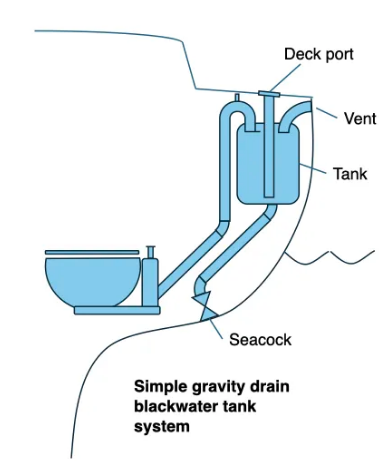
The high tank problem
On the Beneteaus and other boats with the holding tank mounted up high, anything you pump through the head has to travel about six feet of vertical 3-inch hose, loop over the top, and drop into the tank. Once it clears that high point (call it “the hump”), it stays in the tank until the next pumpout. So far, so good.
The catch is everything **below** the hump. When you stop pumping, gravity takes over. Whatever’s still sitting in that vertical run of hose slowly slides back down toward the bowl.
If what’s in the hose is salt water, you have a problem. Salt water carries living organisms. They die in the hose. They rot. That funk people blame on the holding tank is almost never the tank. It’s the hose.
Why fresh water at end of day
During the day, you use the saltwater intake to flush. That’s how the system is designed to work, and that’s fine.
But before you leave the boat, two things need to happen:
1. Pump the holding tank out completely.
2. Close the saltwater intake seacock, then run 2 or 3 full bowls of fresh water through the head, pumping each one fully over the hump.
The fresh water does two jobs. It pushes any remaining salt water up and over into the (now empty) tank, and it leaves the entire hose run filled with fresh water instead of salt water. Whatever seeps back down the hose between now and the next charter is clean, not a science experiment.
About that joker valve
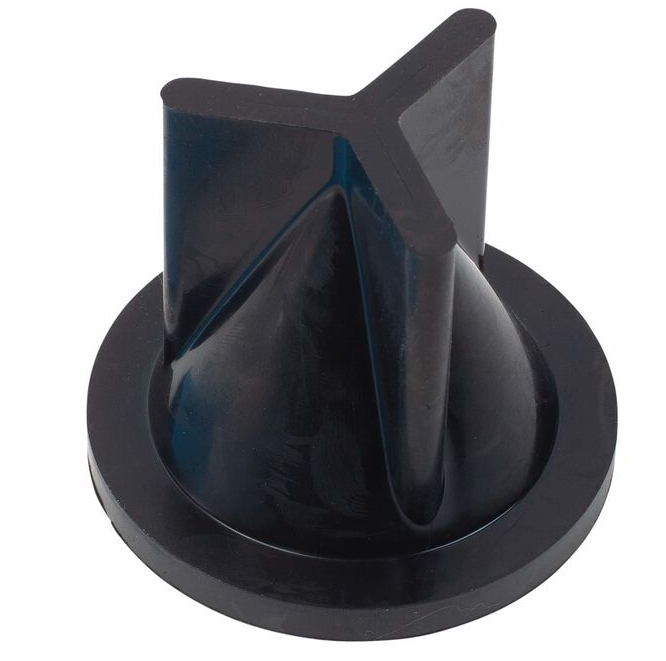
The joker valve is the small piece of rubber inside the head that’s supposed to keep things from coming back. People love to blame it when their boat smells.
On a boat with a high holding tank, the joker valve was never going to stop anything in that hose from seeping back. Even when it’s brand new, gravity wins against a piece of rubber. As the valve ages and saltwater buildup keeps it from sealing fully, the backflow just happens faster.
A new joker valve doesn’t fix a stinky head. A proper end-of-day flush does.
The procedure
1. Pump the tank out fully at the pumpout dock.
2. Close the saltwater intake seacock.
3. Fill the bowl with fresh water from the sink/shower.
4. Pump it all the way through and over the hump.
5. Repeat with 1 or 2 more bowls of fresh water.
The whole thing takes about three minutes. The next person on the boat (or future you) will be glad you did it.
If you ever step on a boat and it smells, it’s almost never a bad valve or bad luck. Someone skipped this step.