Home Made Lead Line

by Tradewinds Member Art E.

After reading Matt’s post some time ago about depth sounders, and with my practice of spending the night at shallow Ayala Cove, I decided I really needed to know where the the keel ends and the bottom of the Bay begins for each boat I take out.

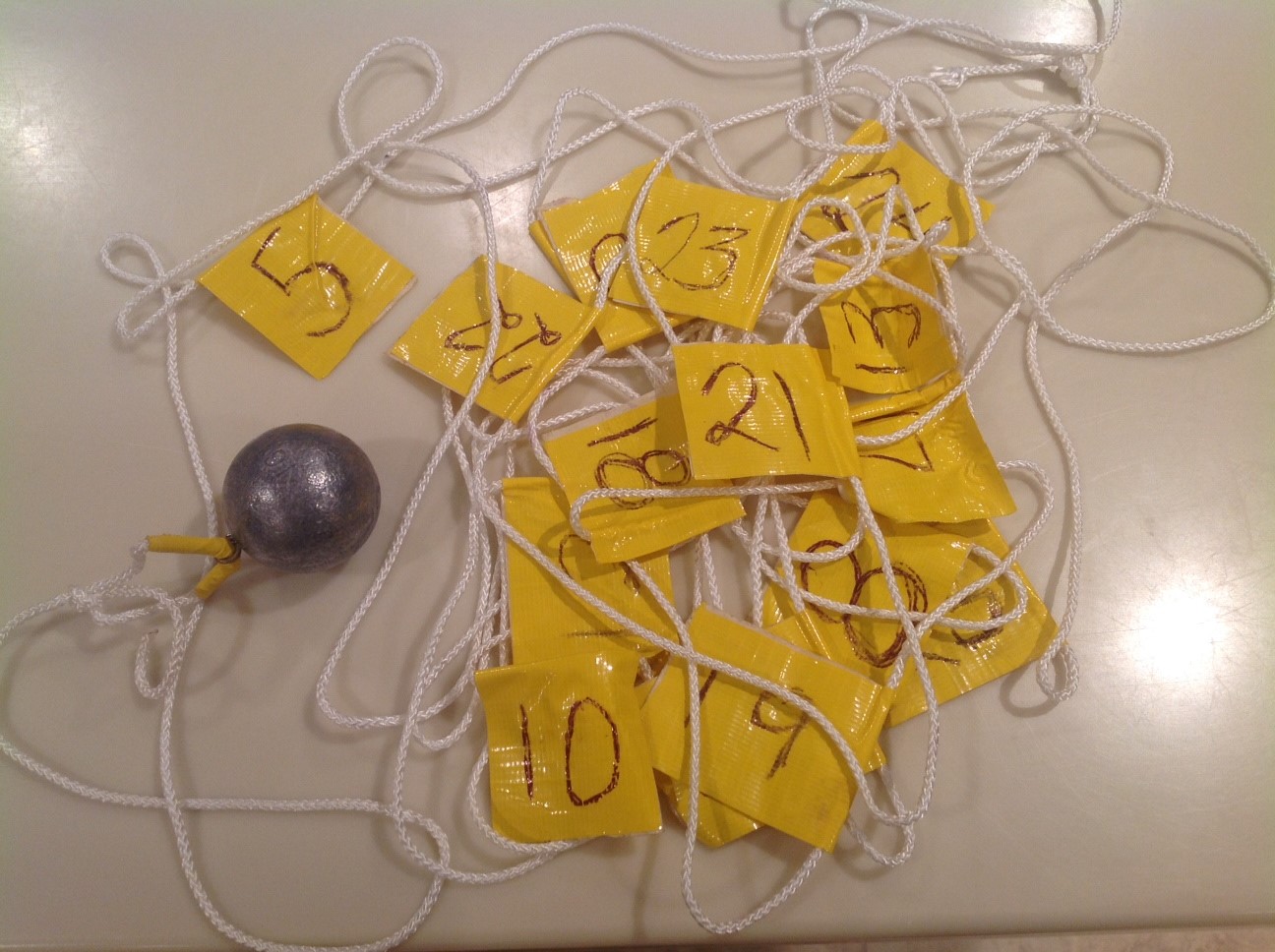
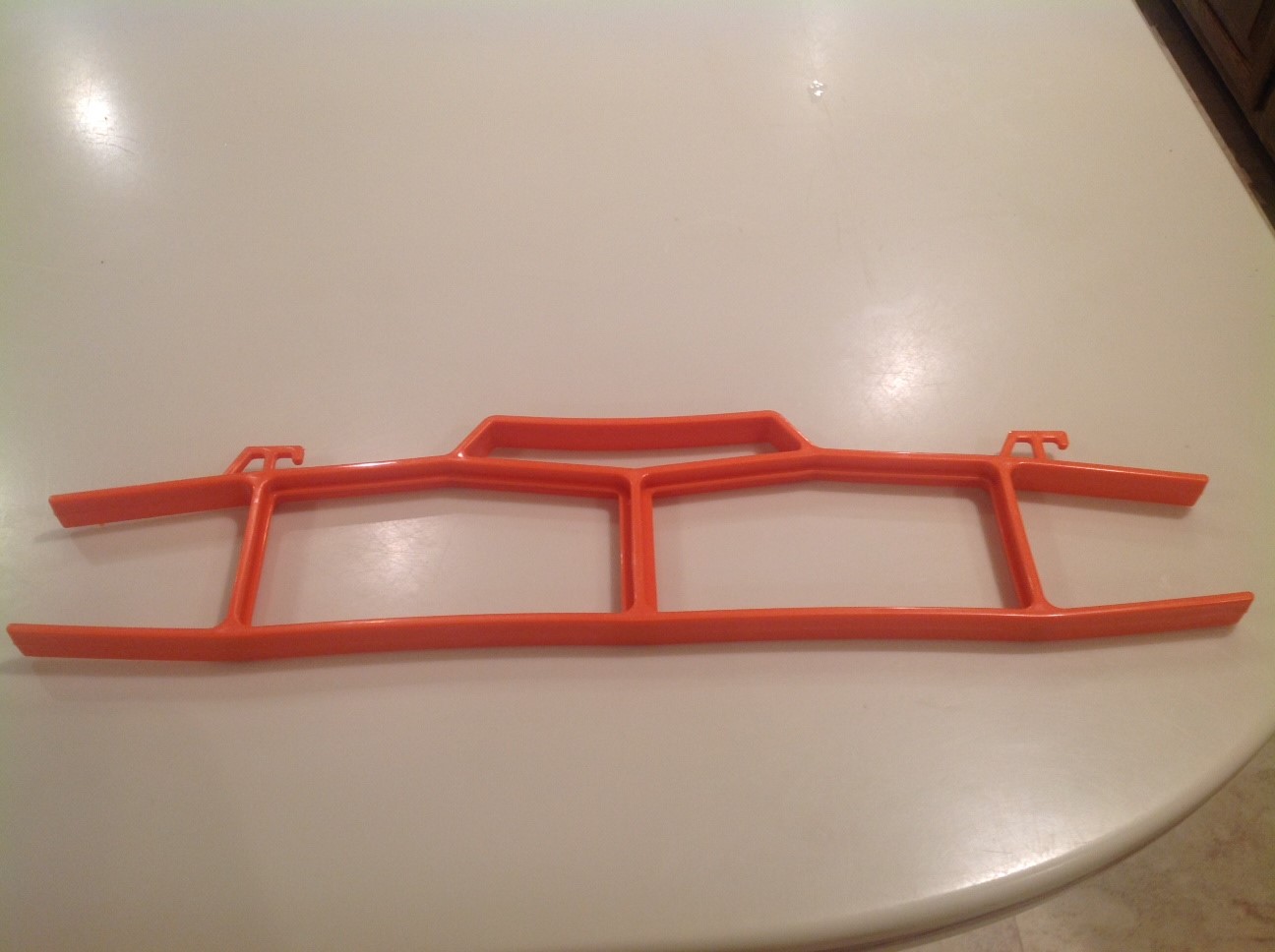
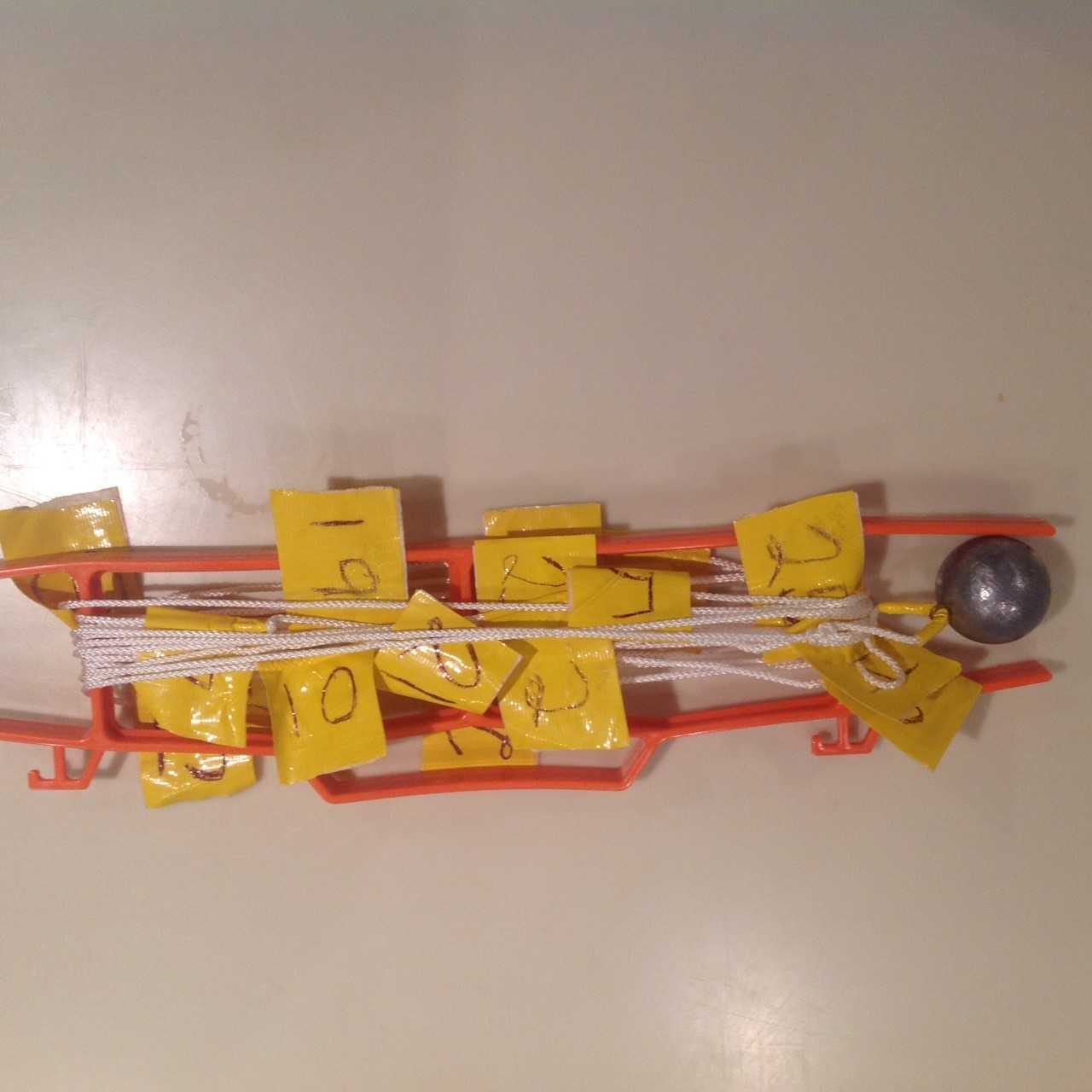
This simple lead line was made for less than $10. Nylon string, a fishing weight, some colorful duct tape and, for a whopping $1. 57 at Home Depot, an electric cord wrap.

Each time I go out on a boat (even the same boat repeatedly) I turn on the instruments, see what the depth gauge reads, and then slip my line over the side before I leave the dock. For the first couple of depth marks I spaced the measurements several feet apart. But after 10 feet I marked the string every two feet up to 25 feet.

Gives me lots of confidence in the depth of the water everywhere I go in the Bay.

Lead Line 1 Lead Line 2Lead Line 3

Posted in General | Leave a comment

Murphy Was An Optimist

We have all heard about Murphy’s Law, “whatever can go wrong, will go wrong,” however, the truth is that Murphy was an optimist, and that was his downfall. There was a lack of preparation and planning on Murphy’s part that caused a test he was responsible for to go totally wrong. Sadly, it’s like that on boats quite often.

Listening to channel 16 on the VHF on a “busy day on the bay” Saturday can be quite an educational experience. Yesterday was a great example. There were a lot of boats out on the bay, too little experience on the part of some of the captains, and a good amount of wind. Added together you have a recipe for disaster. The Coast Guard got called with “emergencies” several times. The one that caught my attention was a 54’ sailboat that had lost all steering. The Coast Guard ran through the normal questions. What is your location? Just South of Angel Island (with the wind blowing from the South). How many persons on board? Seven. Does everyone have a life jacket on? Yes. Are you in immediate danger? The captain responded, rather tentatively, “Not for about 15 minutes.” Vessel Assist came on the radio about this time advising they were in the area and would respond. A few minutes later, the boat safely in tow, the danger was past.

What does all this have to do with Murphy? Preparation, planning, and practice. There are things that can be done to steer a vessel without rudder control.   The sails for example can be used to steer a boat. In this case, the sails were down. Get them up and use them. Trim the main and ease the jib … the boat turns to windward (you can actually do a tack this way). Ease the main and trim the jib … the boat turns to leeward (don’t try to jib this way). Is there something that can be rigged as an emergency “tiller?” Check out books like Chapman’s and the Annapolis Book of Seamanship. Both have some great ideas, and we have copies in the office for your use.

Now to the point of this tip. There are generally things that can be done, however, the middle of an emergency on a 43’ boat is not the time to miraculously come up with a solution. Plan for and practice what you would do. To learn using the sails to steer, take a Capri out and practice it in Marina Bay. Then take a 30’ to 32’ boat out and practice in a safe area. Keep building on the skill … bigger boat … more challenging wind and sea conditions. I have on a couple of occasions sailed back from the San Francisco city front never touching the wheel. Preparation, planning, and practice are what get you through when Murphy’s Law rears its ugly head … and it will.

Posted in General | 1 Comment

Sailing ABC – A is for Anchor – Anchoring, VI

Sailing ABC  by Marianne Wheeler

A is for Anchor – Anchoring, VI

Anchors hold a boat best when they are allowed to dig in and stay flat on the bottom while the rode runs far back at a flat angle of pull to the bow of the boat. The longer the rode, the more horizontal it can tug on the anchor keeping it down and buried. A short rode will make a steep angle of pull to the bow and tug on the anchor vertically, pulling it out and letting it drag.

The angle at which the boat pulls on the anchor is determined by scope, the ratio of the length of rode let out to the distance from the boat’s bow to the seabed. Usually, a ratio of 7:1 is recommended for anchoring overnight in normal conditions.

To figure a 7:1 scope, add the depth of the water to the height of the bow above the water and multiply by seven. Estimate the scope including the tidal differences for the time at the anchorage.

4:1 scope may be enough for a short stop if the wind keeps down.

With all chain rode a 5:1 scope is sufficient for anchoring overnight in normal conditions.

My friend Salty Clay says it’s a good idea to have more scope than not enough. In this case, more is better. When in doubt, pay it out and don’t be caught in a crowded cove with your anchor up.

Posted in General | Leave a comment

Sailing ABC – A is for Anchor – Anchoring, V

Sailing ABC  by Marianne Wheeler

A is for Anchor – Anchoring, V

Cruising boats that lie at anchor for long periods of time and that are likely to anchor in rocks or reefs often use an all-chain rode. Many modern, larger boats do as well.

One good thing about all-chain rode is that the weight of the chain increases holding power by burying into the bottom and staying down flat so that the anchor remains parallel to the sea bed. Another good thing is that using all-chain avoids chafe on the rode as the boat is swinging, tugging and jerking on the anchor.

On the other hand, hundreds of feet of chain are quite heavy when stored on board and that affects the sailing performance of a boat and sometimes even its safety. My friend Salty Clay says that the weight of the chain, usually carried in the bow, front-loads and disturbs the boat’s balance and handling. Chain is also much harder to haul back on board and may require a windlass, a device that makes life at the bow much easier when weighing anchor.

For day sailing, the ideal rode is often a combination of rope and chain. A length of chain, maybe 10 or 15 feet between the shank and the nylon rope, helps the anchor dig in and stay down horizontally. It takes the brunt of merciless chafing on jagged ground while the nylon rope stretches above it and nicely absorbs shock loads on the boat.


Posted in General | Leave a comment

Crew Overboard in the Clipper Race

Recently, during the Clipper Round the World Race, a person fell overboard while changing a sail. Why he wasn’t tethered to the boat and why he did not have a personal EPIRB, we do not know. In all such incidents, the accounts are sketchy, and often written by reporters whose closest encounter with the sea is a volleyball game on the beach. Moreover, I am against criticizing the decisions of the skipper when I wasn’t aboard and have only third-hand knowledge of the circumstances. They could have had a spinnaker up, for example; we don’t know all the details. In the end, the rescue was successful.
That said, I thought it might be a good occasion to review why we do not teach the method of COB recovery allegedly used in this instance. The skipper was quoted as saying, “We have a well-rehearsed procedure to mark the position, stop racing and engage the engine.” I have heard this same method recommended in more than one national sailing publication, and I’m certain that some of our students consider this their fall-back option if they don’t quite remember how to do a quick-stop or a figure eight. So why don’t we teach it that way?
Reportedly, it took the Clipper boat 90 minutes to pick up the victim. He survived, although hypothermic, because, fortunately, he was wearing a dry suit. I recommend that my students set 90 seconds—one-sixtieth of this time—as an achievable goal for returning to the victim. If you take the time to find and activate the GPS’ MOB function, then fumble with getting the engine going and dousing the main, it is almost certain you will have lost sight of the victim. The chances of this are even greater if you are the only person left aboard. Driving under power, the boat will not be maneuverable in a breeze unless you douse the main, so it’s not really an option to leave it up. Getting it down takes a lot of time, especially if you want to secure it so it is not all over the deck for another crew to slip on and find their way overboard. You’ve also created two new hazards: one, in the chaos, you may have left a line in the water, which will find its way into the prop, vastly complicating the situation; and two, the Coast Guard keeps statistics of people getting killed or injured by the prop during the attempt to pick them up, and it’s not a pretty number.
In a seaway, the quick-stop method may be the best, although the figure eight is preferred by some. These must be practiced not merely until you think you understand them because in panic mode your “understanding” will vanish. They should be practiced until they are completely automatic and you can’t not do them right. In either maneuver, you’ll return to the victim quickly without losing sight of them. The figure eight, if done properly, will take you back to the COB even if you can’t see them. Don’t delude yourself that starting the engine will make the situation simpler. It won’t. By all means press the MOB button on the GPS. But if your man-overboard practice is up to speed, you shouldn’t need it.

Posted in General | 2 Comments

Sailing ABC – A is for Anchor – Anchoring, IV

Sailing ABC  by Marianne Wheeler

A is for Anchor – Anchoring, IV

Ground tackle, the anchor with the anchor rode work together to keep a boat from getting underway without its skipper at the helm. The length and strength of rode required are dictated by the size of the boat and by different anchoring situations. A 35 foot sail boat may carry 250 feet of rode for its 25 lb. anchor.

Mostly, three-strand twisted or double braided nylon rope is used for anchor rode, because of its strength and elasticity. Nylon can gradually stretch up to a third of its length under load, which is particularly helpful when the boat surges in choppy waves in the anchorage. The anchor rode on a 35 foot boat may have holding loads of 1000 lbs. in normal conditions and more than two times as much in stormy weather.

Rope is relatively easy to store and light to handle, but it can chafe and break, or deteriorate from dirt, salt, and sun.

My friend Salty Clay says it’s a good idea to regularly check for wear and tear on the anchor rode. When hanging on the hook for more than enjoying a lunch, avoid continued stress on points where the rope chafes on deck – the nip on the rode – by easing out a little more line from time to time.

Posted in General | Leave a comment

COOL … aka, Gone Walk-About

When things go wrong, there usually isn’t any warning and it happens very fast! Take for example a line wrapped around a shaft and/or prop. Take it from personal experience; there is no warning at all, until the motor stops.

COOL goes a long way to stopping that particular problem. We all check the Coolant and Oil each day before leaving the slip, but how diligent are you with Overboard Lines?

Here is a quick tip to help. Get off the boat and walk all of the way around it. I know … too easy, right.

Here’s a bit more detail. First and foremost, don’t delegate, do this yourself! Start at the stern, at the end of the dock finger. Look for any line in the water or being used to secure the boat to the dock. Now, walk all the way around to the stern on the other side checking for lines the whole time. As you pass the dock box, flip off the AC breaker. Remove the spring lines and lay them carefully along the dock (a spring line may be long enough to foul a prop if it ends up in the water). Disconnect the AC Power cord and stow it safely on the dock. There should now only be four lines remaining, port and starboard, bow and stern.

While doing your walk around, start thinking LOT … but that is a story for another day.

Posted in General | Leave a comment

Sailing ABC – A is for Anchor – Anchoring, III

Sailing ABC  by Marianne Wheeler

A is for Anchor – Anchoring, III

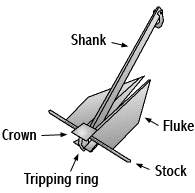
Most anchors are made of strong steel (so they don’t float) and have points called flukes that dig into the bottom or grab onto rocks. They also have a shank between the flukes and the rode which helps the flukes to dig in. Often, there is a horizontal bar called stock that keeps the flukes from twisting out of the bottom as the boat swings from side to side while sitting at anchor. Or, instead of a stock, a shank may swivel over the flukes.

anchor-parts

My friend Salty Clay says at the very least a sailor should know what anchor and ground tackle a boat carries and how to deploy and retrieve it safely.

Before leaving the dock check where the anchor is located, how many are on board and determine the type of anchor(s) and rode.

Is the rode rope or chain, or both? Is it ready to pay out smoothly? Is it attached to the anchor securely? Is the bitter end attached to the boat? Is it attached in a way that it can be released in a hurry, if necessary? How long is the rode and are there depth markers on it?

Posted in General | Leave a comment

What Time Should I Leave?

“You may not operate boats under power or sail between sunset and sunrise.”  The sentence in the club manual is such a simple statement, and yet there is so much confusion over it.

It’s March 21, 2014, and I just received a call in the office that got me to thinking.  The questions asked were “What time is sunset tonight?” and “What time do I need to leave Pier 39 to get back in time?”

Unfortunately, I wasn’t able to give a good answer off the top of my head to either question.  The answers require a bit of research and planning.  An effort that I recommend each captain (yes, that’s you and me when we take a boat out) complete prior to leaving the slip for a day’s sailing.

According to the Tide Tables (yes, it’s there … look at the last page) sunset on March 20 was 1922.  On March 25, it will be 1926.  A bit of simple math in my head tells me that sunset today will be approximately 1923 … as “observed from sea level at the Golden Gate Bridge.”  That’s a great starting point; however, if you arrive back in Marina Bay at 1923, it will be well past sunset.  First, Marina Bay is about 7 miles east of the gate, so the sun goes down earlier.  Second, and more important, there are mountains that are well above sea level between Marina Bay and the horizon.  Sunset, according to the club rules, is when the sun goes down behind those mountains.  Today, it was more like 1910.  As far as the time to leave Pier 39, its 8.3 miles from Pier 39 to Marina Bay.  At an average speed of 5 knots, that’s 1:40.  However, what are the currents doing?  With a flood it may take less than that.  While ebbing, you can easily add an extra 45 minutes to the trip.  Max flood today was 2.8 knots at 1452.  By 1600 to 1700, there won’t be much current to help, so 1:40 still seems about right.  Leaving at 1700 to 1715 should work.

What about wind.  During normal wind conditions on the bay, you are going to be in the “shadow” of Angel Island for a good portion of the trip.  More than once, I have found myself going backwards because I was sailing slower than the current was flowing.   Motoring at 5 knots wouldn’t be a problem.  Sailing might require extra time.  If you average 2 knots speed over ground, 1:40 just became 4:10 minutes, and you needed to be underway before 1500!

A good skipper takes all of this into consideration and plans accordingly.

Note from Matt: Consider clean-up time as well. As a general rule, to stow a boat properly it takes about 1 minute per foot of boat per day that you spent on it. When we have one of those rare conversations with members about not cleaning up after themselves properly, it’s quite often because they tried to do it in the dark!

Posted in General | Leave a comment

Sailing ABC – A is for Anchor – Anchoring, II

Sailing ABC  by Marianne Wheeler

A is for Anchor – Anchoring, II

The books written about anchors and anchoring would probably fill the hold of the Golden Hinde. There are many different kinds of anchors. All are heavy and increase in weight when pulled up hand over hand.  They all have parts that dig into the bottom of the sea or hook onto rocks, or other boats’ ground tackle.

The two most popular types of anchors today are said to be the Danforth and the plow.

The Danforth, named after its inventor Richard Danforth in 1938 and tested on San Francisco Bay, is lightweight with strong holding power.  It holds well in sand, clay, and hard mud.

Danforth Anchor

Danforth Anchor

The plow, named after its shape and made by various companies, is good for all mud, weeds, and rocky bottoms.

Plow Anchor

Plow Anchor

A 35 foot sailboat might carry a 20 lb. Danforth or a 25 lb. plow anchor, or both. How can a 20 pound anchor hold a 2 ton boat? Anchors have evolved from a rope tied around a heavy stone to very specialized designs for burying themselves into the bottom of the sea with great holding power for the least weight required.

Posted in General | Tagged | Leave a comment