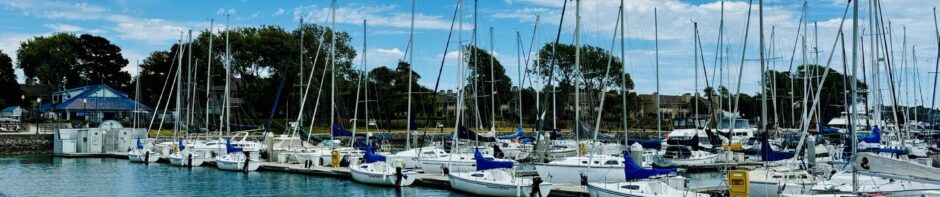
“She’s ship shape and Bristol fashion,” says the old salt. What does he mean?
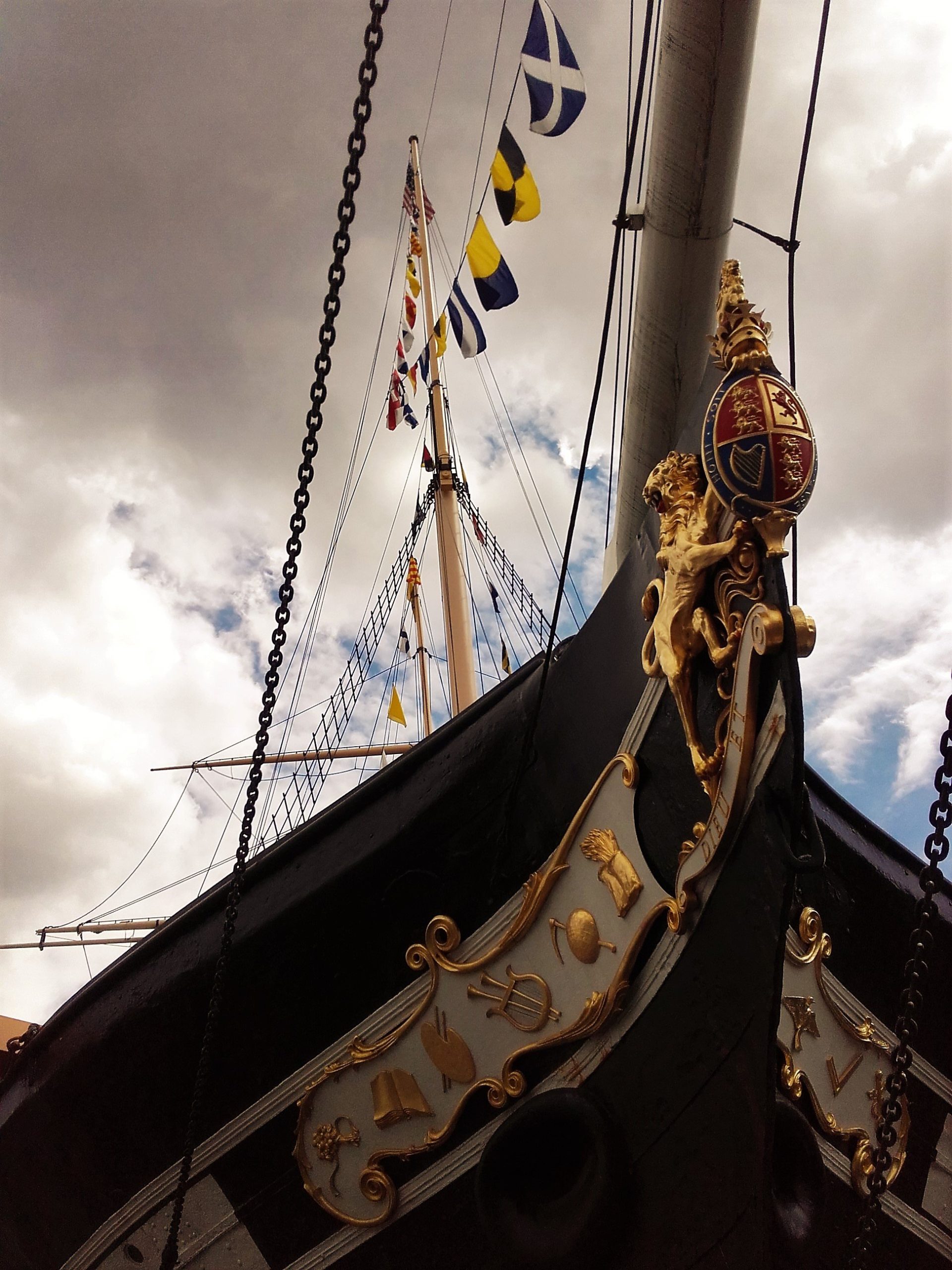
There are really two phrases here. The first, “ship shape,” has a relatively obvious meaning and can be traced back in usage to Sir Henry Manwayring’s Seaman’s Dictionary of 1644.
“Bristol fashion” is perhaps more recent, first appearing in literature in Richard Henry Dana’s Two Years Before the Mast, 1840. But its origin must be traced at least to before the beginning of the 19th century, when a dam and lock were constructed at Bristol Harbor. Bristol, a city in southwest England on the river Avon from which the nearby Bristol Channel and the eponymous cutter take their names, has been a port since the 13th century. But the tidal range here is second only to Canada’s Bay of Fundy, ranging up to 30 feet and more. Therefore, at low tide a ship at anchor would settle into the mud, heeling over to port or starboard on her keel. A ship that could withstand this weight on her hull without leaking, and whose provisions and cargo were stowed carefully enough that they did not come adrift when at an angle, was said to be “Bristol fashion.”
Nowadays, “ship shape and Bristol fashion,” often shortened to “Bristol,” refers to the condition of a boat maintained to a fare-thee-well, with all essential gear, and with everything in its proper place. I’ve never been quite able to achieve this admirable level of perfection, because every once in a while I like to actually go sailing.
The opposite of this is a boat where everything is “ahoo.” This term has a murkier provenance but is a salty term for “totally messed up.” After a storm, the deck of any boat may be somewhat ahoo (although you may find the contrary result that all unnecessary equipment has been scoured away). But if you find yourself aboard a vessel where the lockers are a dirty, jumbled heap, tools are rusting away in a moldy bucket, and every line, rather than being properly coiled, is lazily sprawling on the deck waiting for the moment it can jump overboard and into the prop, you have every reason to doubt the condition of the keel bolts. See if you can arrange for shore leave.